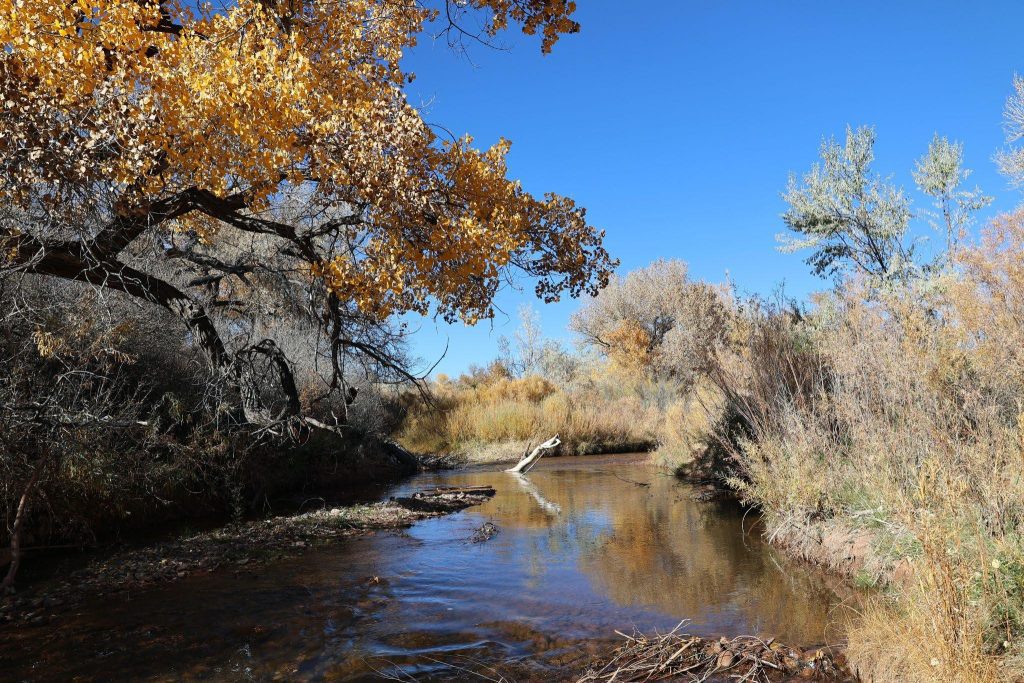
By Diego Salazar, Environmental Science Major, Mentor Laura Crossey. For cities and governments to make informed decisions regarding water use and public health there must be an understanding of ecosystem behavior and health over long periods of time. Long term ecological research at a site provides critical information about ecosystem function, provides training and experience for many graduate and undergraduate students, and makes scientific research publicly available. The Rio Calaveras research site in northern New Mexico was used for over a decade and has a large body of work that has come from it. The research done at the site by Laura Crossey, Clifford Dahm, Armand Groffman, and others covers a wide variety of geo-eco-hydrological processes in headwater streams. The work generally focused on hyporheic zone interactions, primary production, and energy transfer. These topics are important because hyporheic zone interactions dictate how contaminants and other substances travel between surface water and groundwater, and primary production/ energy transfer data shows us how healthy the ecosystem is overall. However, the work done at this site as of now is mostly only accessible to the scientific community. My work with Laura Crossey will present the hydro-ecological research done at the Rio Calaveras site in Northern New Mexico in the form of a website. The website will summarize research done and give an overview of the life cycle of the research site. The site is currently being decommissioned, which involves a cleanup project this Spring because this type of research requires a lot of physical infrastructure. My project will aim to educate the public on some of the research that has been done at the Rio Calaveras site and highlight how the site has been an important part of the careers of many scientists at various academic levels.