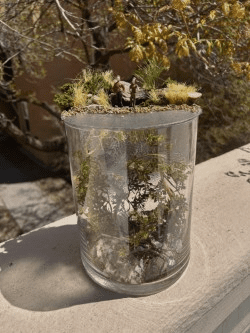
By Xavien Artiaga, Biology Major, Mentor Rhett Sanders-Spencer. Wildfires and other disturbances are increasingly affecting freshwater ecosystems in the American Southwest, especially due to climate change. Headwater streams, like the East Fork Jemez River in northern New Mexico, play a vital role in supporting biodiversity but are particularly vulnerable to these changes. My mentor Rhett Sanders-Spencer is researching how these disturbances, especially wildfires and drought, impact headwater ecosystems over time. His work focuses on benthic macroinvertebrates which are small aquatic organisms that serve as indicators of stream health. By studying how these organisms respond to environmental change, his research aims to provide insight into ecosystem resilience and the ability of these freshwater systems to recover after disturbance. For my Grand Water Challenge communication project, I will present a diorama of the East Fork Jemez River, based on the fieldwork site where Rhett conducts his research. The diorama is designed to help students and others unfamiliar with watershed science visualize what’s happening beneath the surface of a river. Often viewed as just flowing water, rivers are actually home to a hidden world of activity. This model will show how macroinvertebrates live and interact with their environment, and how their presence or absence can reflect the health of the stream. Paired with a short slideshow, this project aims to show why understanding and protecting these freshwater ecosystems is important, not only for scientists but for communities who depend on clean, reliable water.